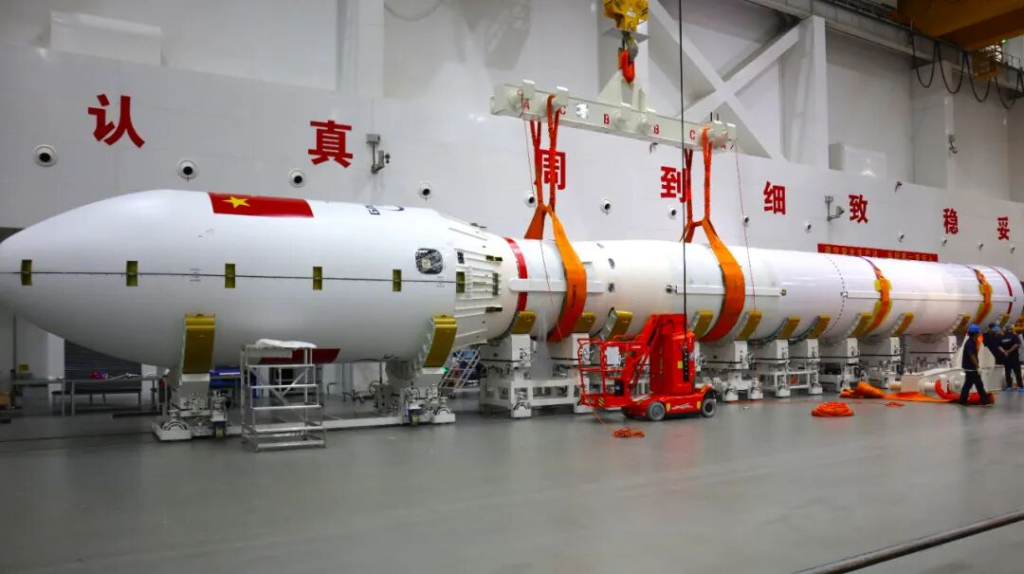
The Ceres-2 is a new, larger solid-propellant commercial launch vehicle developed by the Chinese private space company Galactic Energy. It represents an upgrade over their smaller Ceres-1 rocket, featuring three solid-propellant core stages plus a liquid-fueled upper stage.
Its maiden flight occurred on January 17, 2026 (local Beijing time; approximately 12:08 p.m. CST, or 04:08 UTC), lifting off from the Jiuquan Satellite Launch Center in northwest China. There is not much known about the payload on this mission. According to some sources the Ceres-2 carried about six commercial satellites, including the ultra-flat disk satellite Lilac-3 developed by institutions such as the Harbin Institute of Technology.
The launcher was expected to be able to deliver 1,600 kilograms to 500-kilometer-altitude low Earth orbit (LEO), far above the 400 kg to LEO of the smaller Ceres-1.
The rocket lifted off successfully but experienced an anomaly in the early stages of flight (reported as during first-stage flight). It veered off course shortly after launch and crashed into the ground, resulting in the total loss of the vehicle and its payloads. Footage described by observers showed the rocket flying normally for a brief period before deviating and terminating. Galactic Energy officially confirmed the failure, stating that the mission ended due to the anomaly and that the specific cause was under investigation. The company issued an apology to all involved parties.